
Published · July 27, 2026
Japan Replaces Technical Trainee Scheme with New "ESD" System: What It Means for Nepali Workers
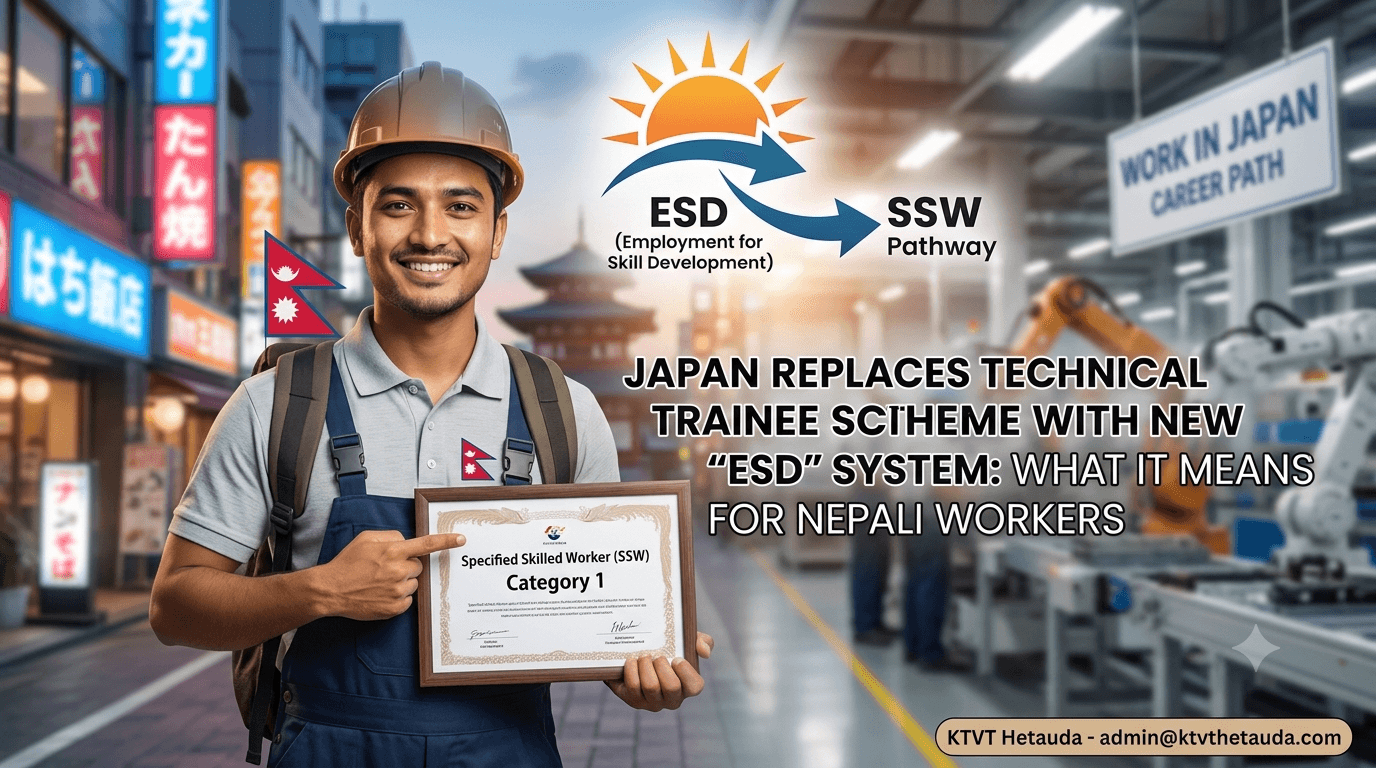
Japan is undergoing a major policy shift by phasing out its long-standing Technical Intern Training Program (TITP) and replacing it with the new Employment for Skill Development (ESD) scheme. While the old training program faced widespread criticism for restricting job mobility and fostering unfair working conditions, the new ESD framework places worker rights, career growth, and skill development at its center.
Key Highlights for Nepali Aspirants
Clear Pathway to SSW Visas: The ESD program acts as a direct 3-year stepping stone toward the Specified Skilled Worker (SSW) Category 1 visa, offering a structured, long-term career trajectory.
Increased Job Flexibility: Unlike the old system, foreign workers will now have the freedom to change employers within 1–2 years, provided they meet basic language and skill benchmarks.
Direct B2B Framework: To protect job seekers, Nepal and Japan are working to update operational guidelines that eliminate unauthorized third-party brokers and curb exorbitant recruitment fees.
Core Requirements: Applicants need basic Japanese proficiency (JFT-Basic or JLPT N4) and must pass sector-specific skill tests.
This landmark reform marks a fundamental shift in Japan’s approach—moving away from treating foreign talent as temporary labor toward welcoming them as long-term, valued contributors to the economy.